
South Florida Hardwood Craftsmanship Since 1956
Hardwood Floors Built for South Florida Living
Choose the construction, species, width, pattern, color and finish as one complete floor, not a collection of disconnected samples.
More Than A Species And A Stain
The Floor Is A Complete System
Hardwood flooring is often sold through a small sample. The finished floor is decided by much more: what supports it, how the wood is constructed, the dimensions of each board, the way the grain is cut, the installation method, the room layout, the color process and the protective finish above it
In South Florida, air conditioning, humidity, concrete slabs, large glass openings and seasonal moisture changes belong in that decision. Endurance Floor Company studies those conditions before turning an attractive sample into a permanent part of the home
Start Below The Wood
Subfloor flatness, strength, moisture and finished elevation shape every option above them
See Material At Room Scale
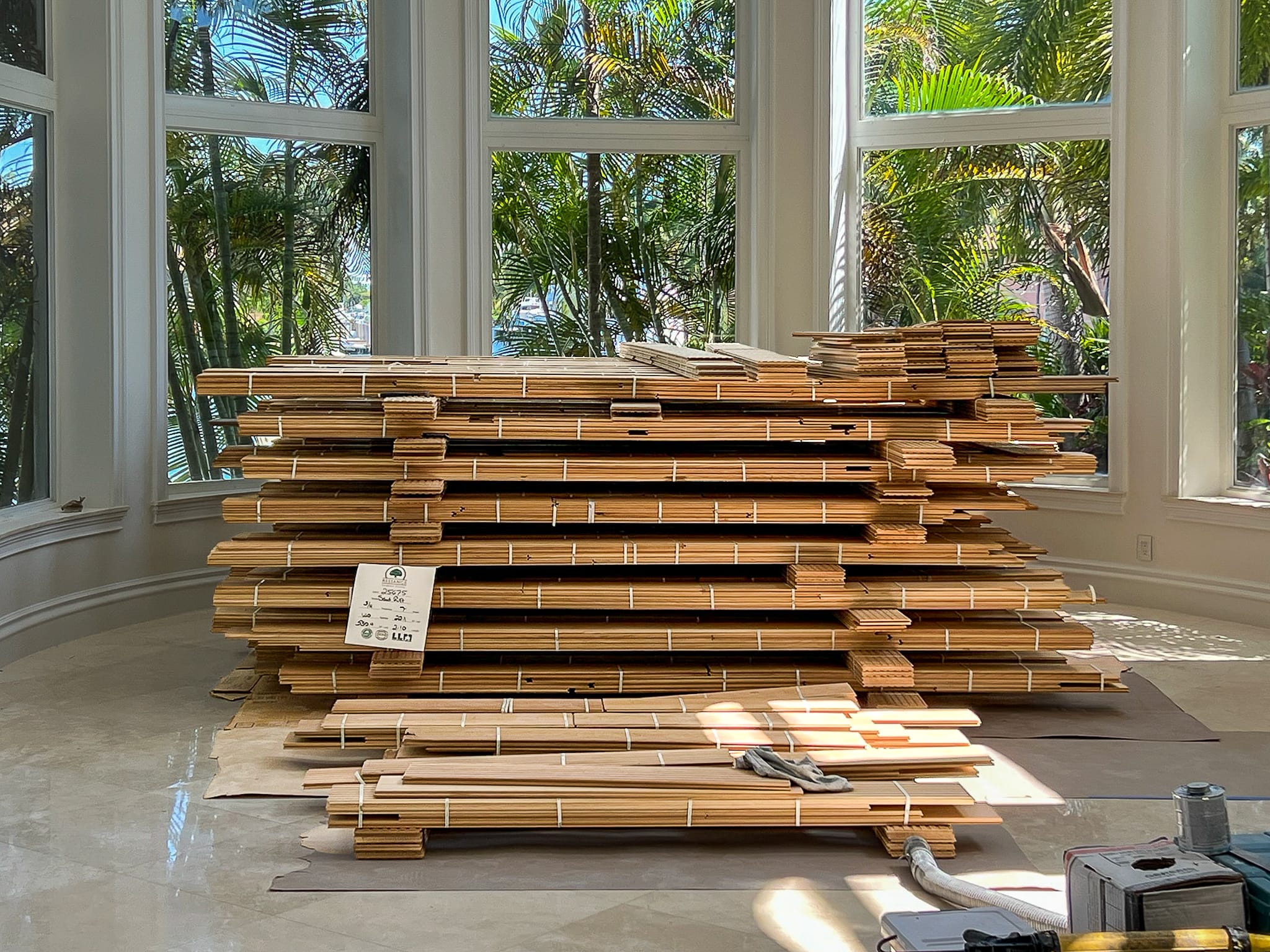
Natural range, grain and board proportions become clear across a meaningful dry layout—not one sample
Build The Appearance Intentionally
Species, cut, width, pattern, color and sheen must support the architecture together
Specify The Entire Finish System
Preparation, sealer, film thickness, drying and cure determine how the surface performs
Decision 1 · Construction
Solid And Engineered Hardwood Are Different Tools
Neither construction is automatically better. The correct choice depends on the substrate, installation method, board dimensions, wear layer, environmental conditions and how the floor may need to be renewed later
Solid Hardwood
Each board is milled from one piece of wood. Solid flooring offers substantial usable thickness and a long history of sanding, repair and refinishing when the floor is properly installed and maintained
- Available unfinished or factory finished
- Commonly fastened over approved wood subfloors
- Responds across its full thickness to environmental moisture
- Well suited to long-term restoration and board-level repair
Engineered Hardwood
A real hardwood wear layer is bonded to a stable core. Construction varies widely, so the thickness and quality of the wear layer, core and milling matter more than the word engineered alone
- Often considered for concrete slab and glue-down applications
- Available in dimensions that would be demanding in solid construction
- Refinishing potential depends on wear-layer thickness and floor condition
- Still requires moisture evaluation and a compatible installation system
>Decision 02 · Species
Choose Character Before Chasing A Hardness Number
Species influences color, grain, hardness, movement, machining, stain response and repairability. The Janka scale is useful context, but it does not measure finish durability, dimensional stability, scratch visibility or whether the floor belongs in the room
White Oak
Approximate Janka 1360A neutral base, prominent rays in rift and quartered material and broad color flexibility make White Oak one of the most adaptable design species
Red Oak
Approximate Janka 1290Open grain, warm undertones and an established presence in American homes make Red Oak valuable for both new work and existing-floor matching
Hard Maple
Approximate Janka 1450A pale, fine-textured surface creates a quieter appearance. Its closed grain can make stain development more demanding than oak
Hickory
Approximate Janka 1820Strong light-to-dark variation and expressive grain produce an active floor. Its hardness does not eliminate denting, scratching or movement
Black Walnut
Approximate Janka 1010Deep brown heartwood, lighter sapwood and elegant grain create visual richness. It is softer than oak and should be selected with that expectation
Specialty Species
Evaluate individuallyCherry, reclaimed material, tropical species and contrasting inlay woods require project-specific review for sourcing, movement, adhesive and finish compatibility
Decision 03 · Proportion
Width Length And Grain Cut Change The Room
Board dimensions are architectural decisions. They change scale, joint rhythm, material yield, movement behavior and how much natural variation appears within each piece
Read the wide plank installation guideNarrow Strip To Wide Plank
Narrow boards create more lines and a finer rhythm. Wide planks reveal more figure within each board and can make large rooms feel quieter, but their dimensions increase the importance of construction, moisture and installation planning
Board Length And Joint Rhythm
Longer material can calm a floor and emphasize long sightlines. Mixed lengths create a more active composition. End joints should appear naturally distributed rather than forming repeated steps or clusters
Plain Rift And Quarter Sawn
Plain-sawn boards show broad cathedral grain. Rift-sawn boards read straighter and quieter. Quarter-sawn boards can reveal ray fleck and distinct reflective character, especially in oak
Clear Select Character And Reclaimed
Grade influences knots, mineral streaks, color range, checking and other natural features. It should be selected for the intended visual language—not treated as a simple ladder from bad to good
Decision 04 · Layout
The Pattern Controls How The Eye Moves
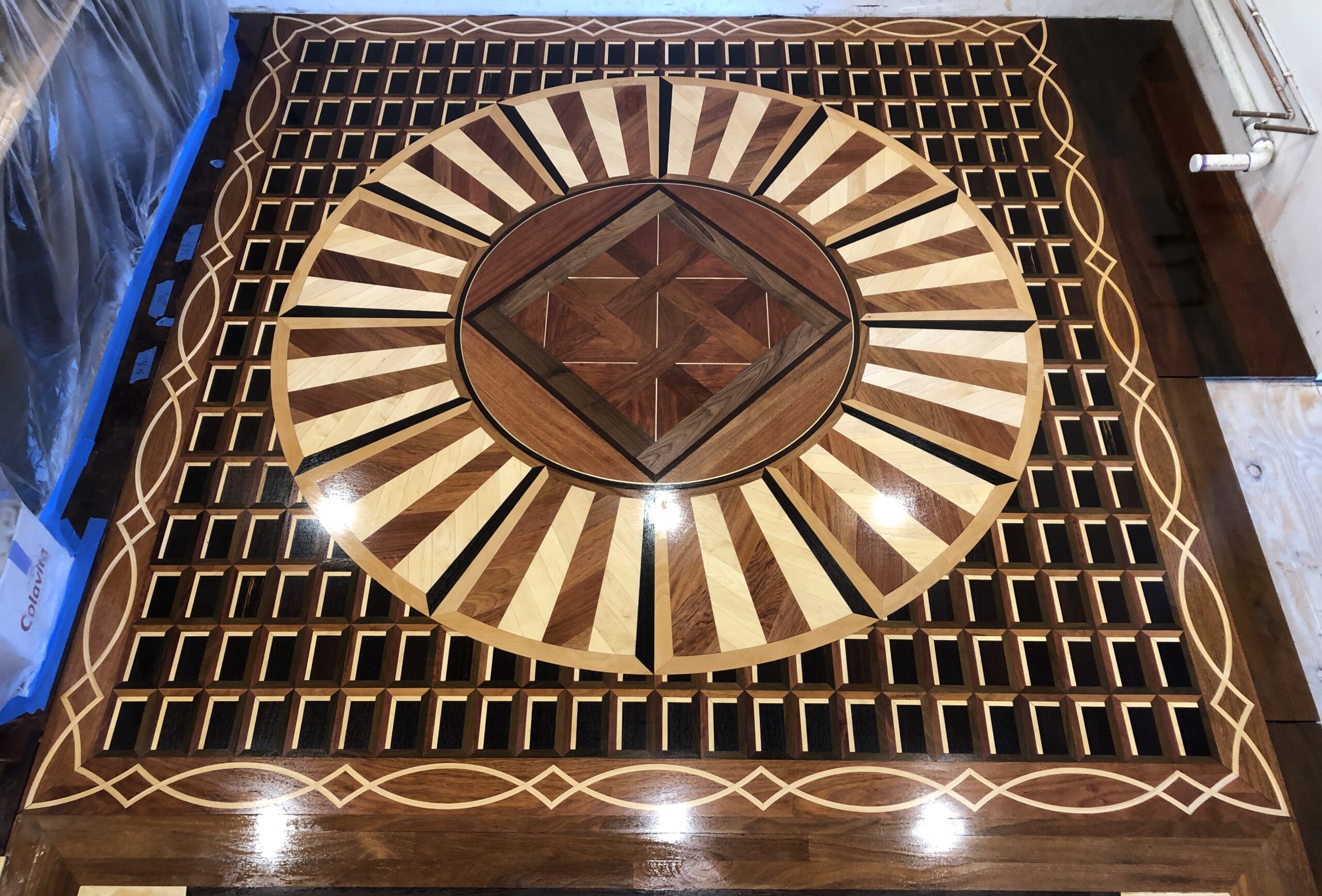
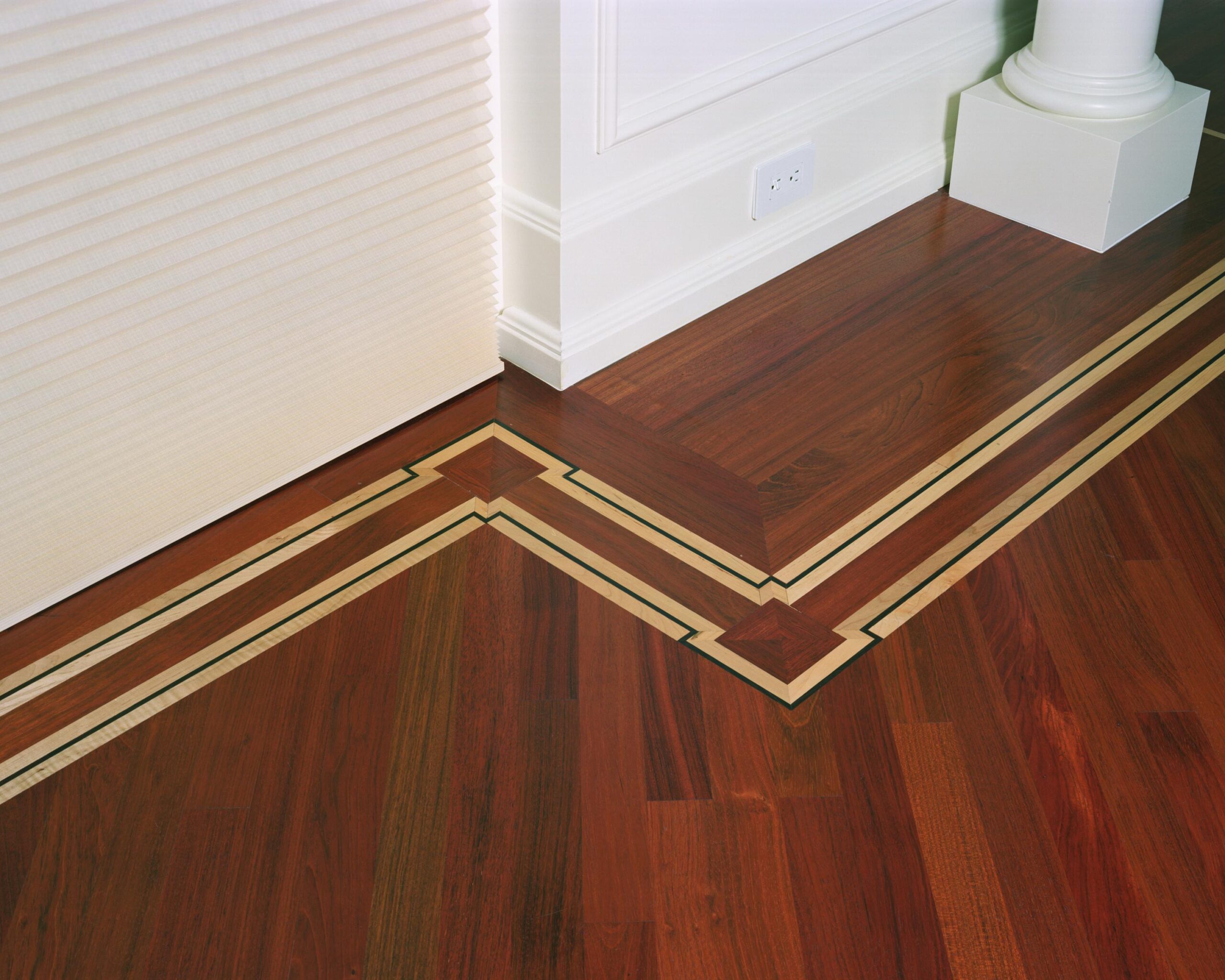
Straight plank flooring can support the architecture quietly. Herringbone, chevron and parquet can establish direction, center a room or turn the floor into an architectural feature. Borders and inlays can frame a field, connect materials or create an original focal point
Straight Lay
Timeless, efficient and highly dependent on board selection, joint distribution and sightline control
Diagonal
Adds movement and changes the relationship between the floor, walls and primary view through the room
Herringbone And Chevron
Two distinct geometric systems that require accurate reference lines, controlled angles and deliberate perimeter planning
Parquet And Panels
Repeating modules, basketweave, Versailles-inspired panels and original geometry built at a scale suited to the room
Borders Medallions And Inlays
Custom elements that combine species, grain, fabrication and finish into one designed composition
Decision 05 · Color And Protection
The Finish Changes More Than Sheen
Color and finish affect warmth, contrast, grain definition, cleanability, repair strategy and how the floor responds to light. A sample must represent the actual species, sanding sequence, color process, sealer and finish system
Clear And Near-Natural Floors
Clear systems preserve the species close to its raw identity, but every sealer and coating shifts tone differently. White Oak can move from pale neutral to warm amber depending on the system
Custom Stain Development
Species, grain, sanding and application affect absorption. Samples should be large enough to show earlywood, latewood, color range and how the result relates to cabinetry, stone and light
Dyes Fumes And Reactive Color
Advanced color systems can create effects ordinary pigment stain cannot. They demand controlled samples, compatible products and an understanding of how the wood itself participates in the reaction
Matte Satin And Higher Sheen
Lower sheen can soften reflection and make minor wear less conspicuous. Higher sheen increases reflected light and can make surface conditions more visible. Neither replaces correct maintenance
The Endurance Site-Finished Standard
One Sealer Coat And Three Full Finish Coats
Endurance builds its standard site-finished system to the coating manufacturer’s film-thickness, drying and cure requirements. The exact products are selected around the wood, color direction, use, conditions and maintenance goals
Understand hardwood finish systems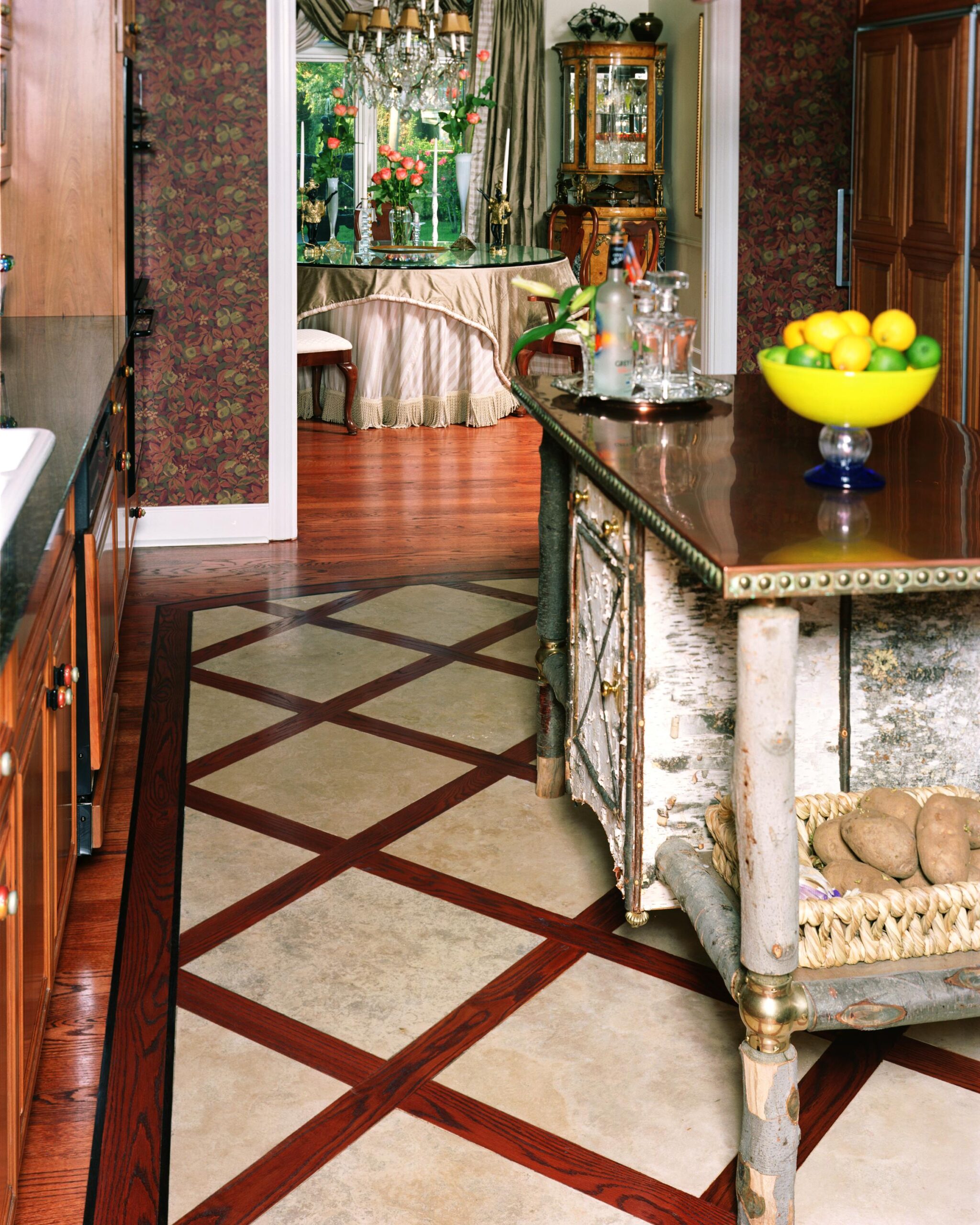
Decision 06 · Local Conditions
Heat Humidity Concrete And Air Conditioning Matter
Local experience is not only knowing the neighborhoods. It is understanding how conditioned interiors, humid exterior air, concrete slabs and large openings interact with wood flooring
Concrete Slab Moisture
The slab and the wood flooring require separate evaluation. Primers, adhesives, moisture-control systems and installation methods must be compatible
Interior Environmental Stability
The conditions present during installation should represent the environment the floor will live in—not a temporary construction condition
Material Conditioning
Acclimation is a measured relationship between the material and the jobsite. A fixed number of days cannot replace documented conditions
Exterior Openings And Sunlight
Large doors and windows can introduce moisture, heat and ultraviolet exposure. The floor, finish and maintenance plan should anticipate them
Transitions And Elevations
Stone, tile, carpet, stairs and exterior thresholds establish elevation requirements before hardwood thickness and underlayment are finalized
One Company Across The Floor’s Life
Choose The Service Around The Floor You Have
The same material knowledge supports new installation, restoration, custom fabrication, repair and the architectural details that connect one surface to another
Hardwood Floor Installation
Subfloor evaluation, moisture documentation, dry layout, board selection, installation, sanding and finish
Explore installation → 02 · Existing FloorsSanding And Refinishing
Condition evaluation, repairs, dust containment, progressive sanding, color development, coating and cure
Explore refinishing → 03 · Original DesignCustom Floors And Parquet
Herringbone, chevron, panels, borders, medallions, marquetry and original compositions fabricated for the room
Explore custom work → 04 · Preserve And CorrectRepairs And Maintenance
Board replacement, weave-in work, water-damage evaluation, maintenance coats and long-term care planning
Explore repair options → 05 · Connect The ArchitectureStairs And Custom Treads
Treads, risers, nosings, landings and transitions coordinated with the adjoining hardwood floor system
Explore stair work →From Material To Finished Floor
How Endurance Builds The Decision
The right floor becomes clear through a sequence. Each stage removes uncertainty before the next decision becomes permanent
- 01
Evaluate The Space
Document the subfloor, moisture conditions, elevations, architecture, use and existing materials
- 02
Define The Visual Direction
Compare construction, species, grade, cut, dimensions, pattern, color and sheen
- 03
Build Full-System Samples
Use the real wood with the planned sanding, color, sealer and finish sequence
- 04
Prepare What Supports The Floor
Resolve flatness, strength, cleanliness, moisture and finished elevation before installation
- 05
Review Material At Scale
Dry lay a meaningful quantity so color, grain and proportions can be judged together
- 06
Install Select Sand And Finish
Control the field board by board, then complete the surface and coating system
- 07
Turn Over A Maintainable Floor
Provide cure, cleaning, furniture, rug and maintenance guidance for the exact finish
Go Deeper Before You Decide
Hardwood Floor Planning Guides
Endurance’s knowledge library explains the technical decisions behind the finished work so homeowners, builders, architects and designers can plan from the same information
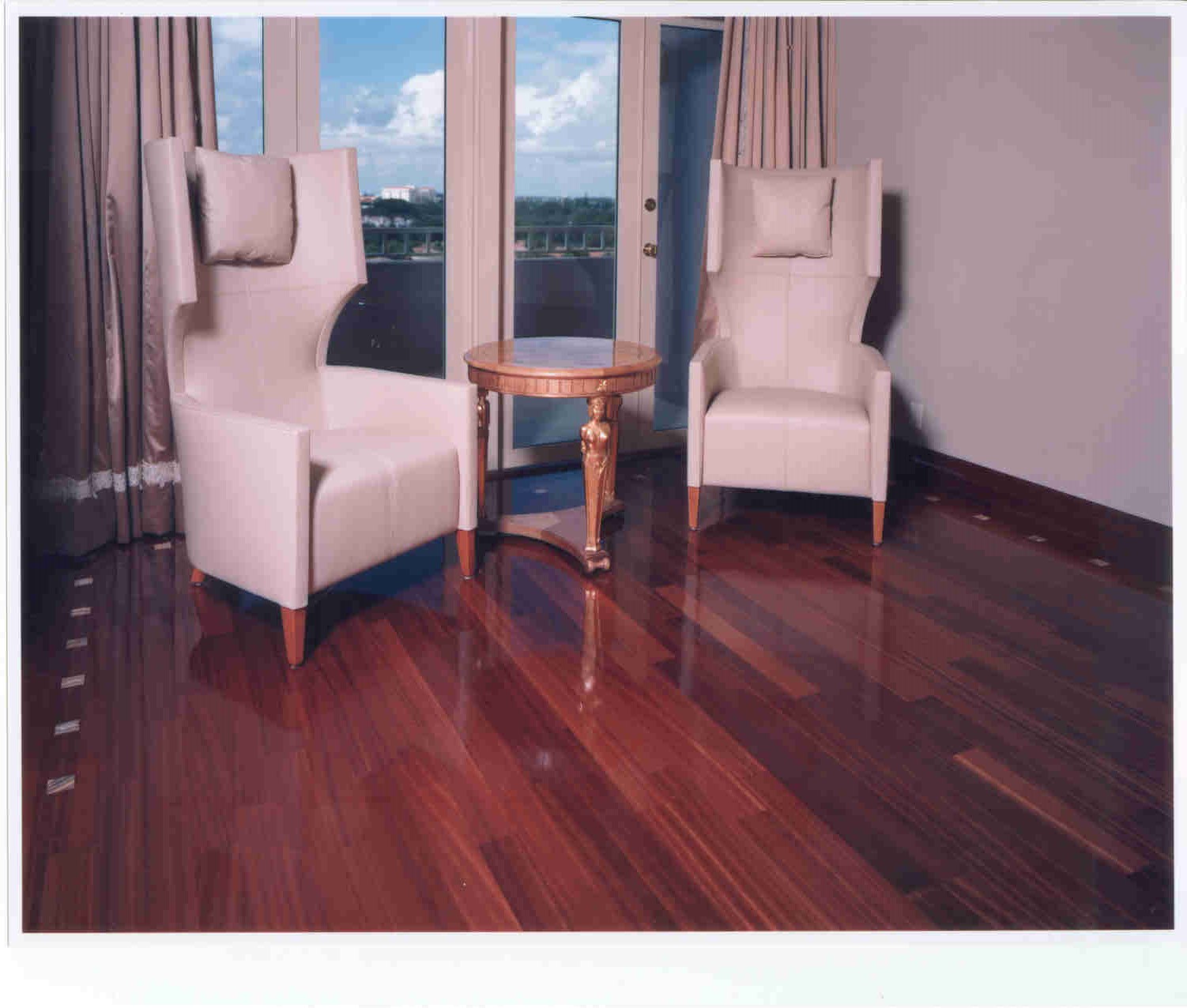 Installation
Hardwood Floor Installation Methods Compared
Read the guide →
PreparationSubfloor Preparation For Hardwood Flooring
Read the guide →
MoistureMoisture Management In Hardwood Installation
Read the guide →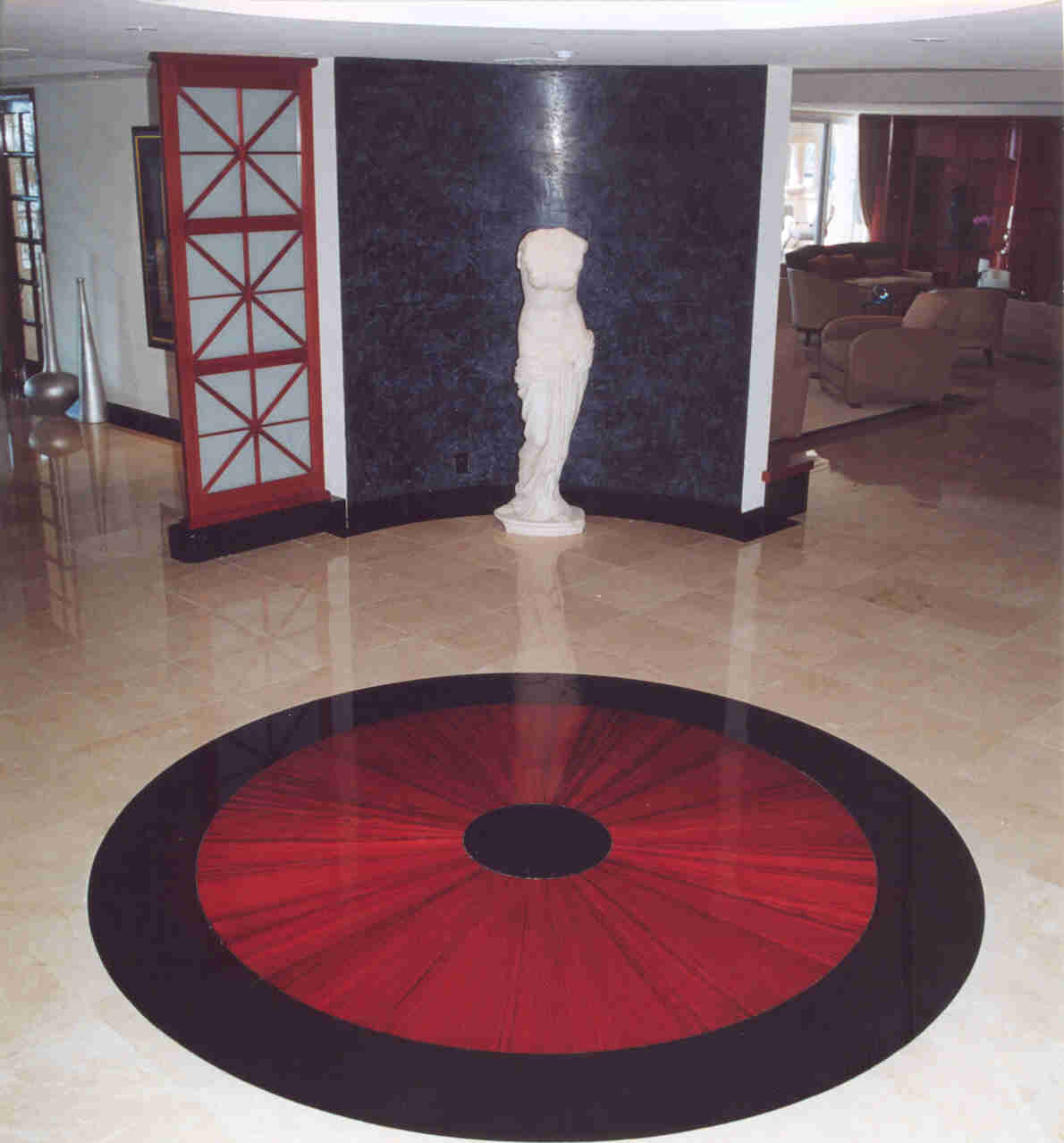 Color
Hardwood Floor Stain Selection And Custom Color
Read the guide →
FinishHardwood Floor Finish Systems Explained
Read the guide →
DesignCustom Hardwood Floor Patterns And Parquet
Read the guide →Hardwood Floor Questions
What Homeowners Should Know
Every project still requires an on-site evaluation, but these principles help frame the right conversation
Is engineered hardwood better than solid hardwood in South Florida
Engineered hardwood can be an excellent option over concrete and in wide dimensions, but quality varies significantly. Solid hardwood offers different installation and long-term refinishing advantages. The correct choice depends on the slab or subfloor, moisture conditions, board construction, installation method and desired service life
Can hardwood flooring be installed over concrete
Yes, when the slab is properly evaluated and the complete system is compatible. Flatness, moisture conditions, surface preparation, primers, moisture-control products, adhesive, flooring construction and finished elevation all belong in the plan
Which hardwood species is best for a busy home
No species wins every category. Hardness matters, but so do grain, color, finish, maintenance, repairability and how visible normal wear will be. Oak remains versatile because of its balance of performance, appearance and finish options, while other species may better support a specific design
Are wide plank floors more likely to move
Board width increases the dimensional effect of moisture change across each piece. Construction, cut, environmental stability, material conditioning, installation method and expansion planning become especially important as boards become wider
Can engineered hardwood floors be refinished
Some can. Refinishing potential depends on the thickness of the real-wood wear layer, the remaining material above the tongue, the number and quality of prior sandings, surface flatness, bevels and the damage that must be removed. The floor should be inspected before sanding is promised
Should the floor match cabinets and furniture
The floor does not need to match every wood surface. It should create a deliberate relationship with cabinetry, doors, stone, paint, rugs and natural light. Contrast can be more successful than a near match that looks accidental
What makes a hardwood floor easier to maintain
A compatible finish system, correct cure, felt protection, grit control, approved cleaner, prompt spill response and maintenance before wear reaches bare wood all help. Care instructions should match the exact coating—not generic hardwood advice
Installation · Refinishing · Restoration · Original Design
Bring Us The Room The Material Or The Beginning Of An Idea
An Endurance evaluation starts with the actual floor, actual conditions and the level of work the project requires